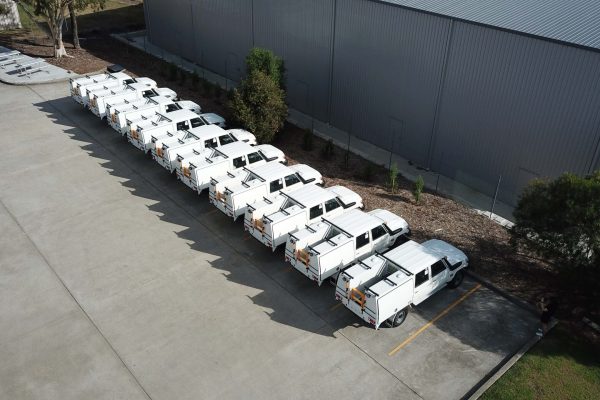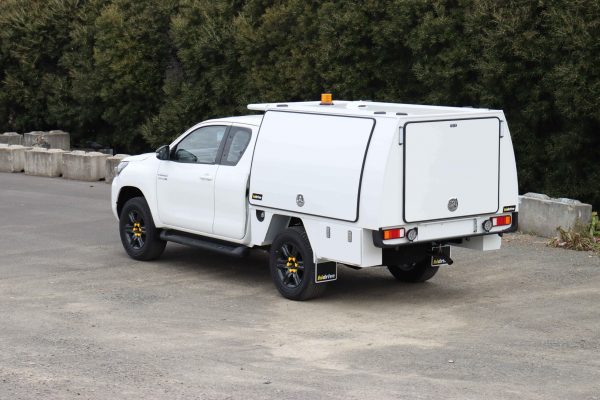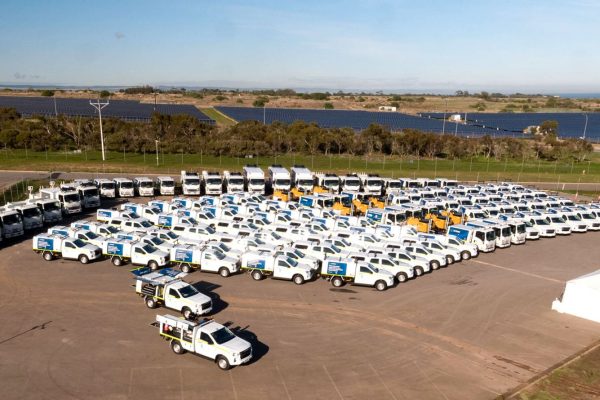
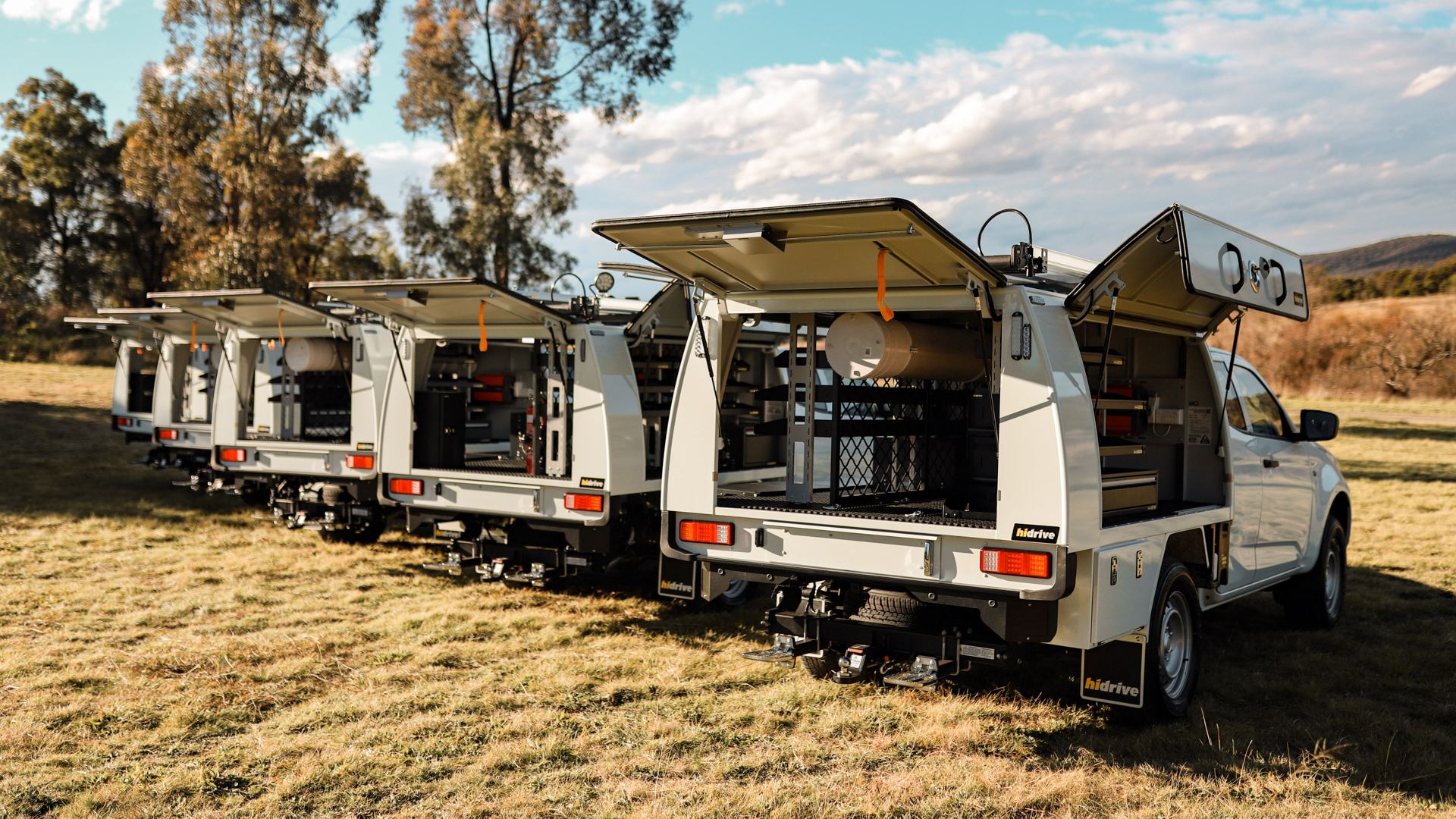
The right ute fitout starts with your working day, not a list of accessories. What do you carry? Which tools do you reach for most? And what frustrates you about your current setup?
Whether you’re fitting out one work ute or planning a consistent setup across several vehicles, the best place to start is the job each vehicle needs to do.
At Hidrive, we help businesses turn those requirements into practical storage, access and electrical options. A little preparation will help us understand what matters most to you.
You don’t need a finished design before your Customer Service call. Work through these five points and bring your questions.
1. Start with what you carry
Make a list of the tools, equipment and materials you take to work. Separate the everyday essentials from the gear you only need for particular jobs.
Think about:
- Size: What’s your longest, tallest or bulkiest item?
- Weight: Which items are heaviest, especially when fully loaded?
- Protection: What needs enclosed storage, and what needs a separate or externally mounted solution?
- Frequency: What comes out at every stop, and what rarely leaves the vehicle?
A field service technician might carry diagnostic equipment, spare parts and battery chargers. An electrician may need room for cable reels and fittings, while a facilities maintenance team could require secure storage for consumables, testing equipment and replacement components. Mobile mechanics, utility crews and telecommunications technicians often need storage built around larger or heavier equipment.
Include the occasional big load too. A setup that works for routine servicing may need a different layout when you’re carrying equipment for a major installation, planned shutdown or specialised project.
Before your call, take a few photos of your current setup and measure any awkward items. They’re often more useful than trying to describe everything from memory.
2. Put everyday gear within easy reach
Good organisation isn’t about fitting in the most drawers. It’s about being able to find and access what you need quickly, without unpacking half the vehicle every time you stop.
Think through a typical day. Where do you park? Which door do you open first? What equipment do you reach for most often?
The answers can influence everything from shelving heights and drawer locations through to where larger equipment should be stored.
Drawers can help separate hand tools and smaller equipment. Shelving and parts bins can give fittings, fasteners and consumables a regular home. Hidrive’s modular storage options include adjustable One-Click shelving, vehicle drawers and parts cabinets.
For example, a service technician might keep frequently used spare parts near the door they use most. A maintenance team could group consumables and replacement components in labelled bins so they’re easy to find onsite.
Discuss keeping heavy items low and positioned to suit the vehicle’s load distribution. Everything also needs suitable restraint for travel, not just a space where it fits.
Think about where you’ll stand when accessing your gear, particularly when parked beside a road, in a carpark or at a busy worksite.
3. Choose a canopy or service body configuration around the job
The right canopy or service body configuration depends on how much enclosed storage you need and what has to travel outside it.
Hidrive’s ute range includes:
- Full canopy: Enclosed storage for tools, parts and equipment. A practical starting point if most of your load needs protection from the weather.
- Part canopy: Enclosed storage combined with an open rear tray area, useful when your day includes bulky or dirty equipment.
- Tool canopy: Secure side storage with an external centre aisle for longer or larger items.
- U Canopy: Deeper enclosed storage combined with external aisle space and a rear tray area.
The best configuration depends less on your industry and more on what you carry, how often you access it and where you work.
A technician carrying diagnostic equipment, spare parts and battery chargers may prioritise secure enclosed storage and easy access to smaller components. A council maintenance crew or parks team may need a combination of enclosed storage and open space for larger tools, equipment or materials.
Your vehicle matters too. Bring its make, model, year and cab type so the team can confirm suitable body sizes and configurations. Mention ladders, long materials, garage clearance and any trailer you regularly tow.
If you carry gas bottles, fuel or chemicals, flag them early so the team can discuss appropriate storage, ventilation and restraint requirements.
4. Plan power and lighting around actual use
Start with what you need to run rather than choosing a battery or inverter first.
For some businesses, that may simply mean charging cordless batteries between jobs and improving visibility inside the canopy. Others may need to power laptops, diagnostic tools, testing equipment, printers or specialised devices throughout the day.
Hidrive offers options including dual-battery systems, REDARC inverters, LED interior strip lighting and external LED worklights. The right combination depends on your equipment and how you work.
For your call, note:
- The devices and chargers you want to use.
- Their power ratings, or bring photos of the labels.
- What needs to run at the same time.
- How long you’ll use them while parked.
- How much driving you normally do between jobs.
An inverter’s output must suit the connected equipment, including any start-up demand. Battery capacity and charging arrangements also need to suit the expected use.
For lighting, consider both finding gear inside the canopy and illuminating the area where you work. A bright external worklight doesn’t replace well-positioned internal lighting.
5. Understand your payload, GVM and towing limits
Storage space and carrying capacity are not the same thing. An empty drawer is an invitation to add more gear, but every addition has weight.
It’s easy to focus on storage space and layout, only to discover later that the combined weight of the canopy, equipment and accessories leaves little capacity for tools, materials or passengers. Consider payload from the start, alongside the layout and accessories.
Your loaded vehicle needs to account for the canopy or service body, accessories, tools, stock, fuel, driver and passengers. If you tow, the trailer’s towball download also adds load to the vehicle.
Gross Vehicle Mass (GVM) is the maximum permitted total weight of the loaded vehicle. Front and rear axle limits matter as well. Being under GVM doesn’t automatically mean both axles are within their limits.
Ask the team to assess the proposed fitout against your vehicle and expected working load. Once complete, weighing the vehicle in its normal working condition, including checking axle loads, helps confirm the result.
A suspension upgrade alone does not increase the vehicle’s legal GVM. Any GVM increase requires an approved, certified process appropriate to the vehicle and registration jurisdiction. It also doesn’t automatically increase towing capacity or Gross Combination Mass (GCM), which is the permitted combined weight of the vehicle and trailer.
If the proposed setup is too heavy, the answer may be less equipment, a lighter layout, a suitable certified upgrade or a different vehicle better suited to the task.
A few things to have ready for your call
You don’t need to know every accessory name. A clear picture of your work is the best starting point.
Have these handy:
- Your vehicle’s make, model, year and cab type.
- Photos of your current setup.
- A gear list, with dimensions and weights where possible.
- Details of anything you need to power or charge.
- Your main frustrations, budget and preferred timing.
- Any towing, parking-height or site-access requirements.
Not sure about something? Bring what you have. Photos, a few measurements and a rough gear list will give us a useful starting point for working through the options with you.