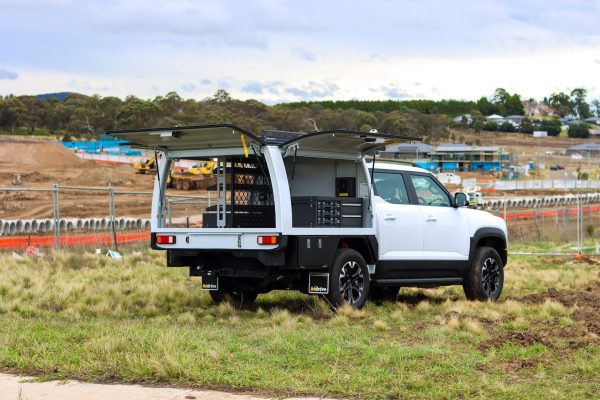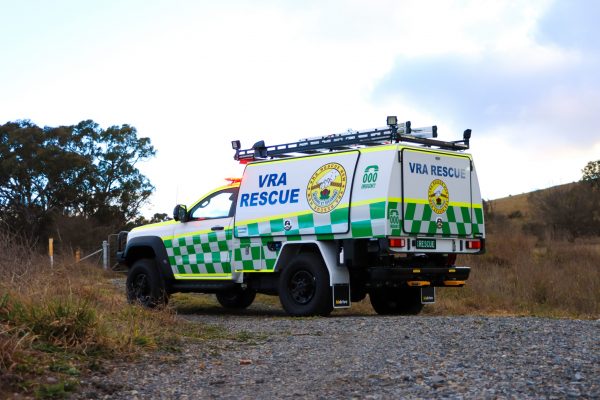
A service body is more than storage. For field technicians, it’s a mobile workplace used every day across construction sites, utility corridors, regional depots and critical infrastructure projects.
If it’s not engineered properly, it can create safety risks, compliance issues and costly downtime.
Yet many procurement decisions focus primarily on storage capacity and purchase price. Safety is often assumed rather than verified. The difference between a well-engineered service body and a poorly designed alternative often becomes apparent only after vehicles enter service through coating failures, damaged components, compromised safety systems or workplace injuries.
This guide outlines the key factors fleet managers should evaluate when assessing service body safety.
Key takeaways
- A safe service body incorporates design features that help reduce workplace hazards, compliance risks and maintenance issues throughout the vehicle’s life.
- Proper surface preparation and coating help prevent corrosion and premature coating failure.
- Flush floors, protected electrical wiring and ergonomic access features help reduce workplace injury risks.
- ADAS compliance is increasingly important as mandatory vehicle safety requirements continue to expand under ADR 98/00, 98/01 and 107/00.
- Lightweight construction helps maximise payload while supporting GVM compliance.
- Fleet standardisation improves safety, training and operational efficiency across multiple locations.
Why do service bodies fail in the field?
The most common failure modes aren’t dramatic. They’re slow, cumulative and often preventable.
Common issues include:
- Coating breakdown resulting in peeling, bubbling or flaking surfaces that expose the underlying material.
- Drawer and shelf failures caused by poor latching systems or inadequate vibration resistance.
- Sharp edges and poor finishing that can create laceration and snag hazards.
- ADAS interference where service body components obstruct sensors or cameras.
- Water ingress through poorly sealed doors, compartments or electrical systems.
- Premature structural wear caused by inadequate materials, coatings or design practices.
These issues rarely appear on a specification sheet. They reveal themselves after months or years of operation and can contribute to increased maintenance costs, reduced vehicle availability and greater safety risks for operators.
The safest service bodies don’t rely on operator behaviour to avoid hazards. They are engineered to remove those hazards before the vehicle ever reaches site.
How does surface treatment protect a service body?
Surface treatment is one of the most important protective barriers on a service body, but the quality of the outcome depends heavily on the preparation that comes before the coating.
Every Hidrive coating starts with surface preparation. Aluminium surfaces are sanded before priming and painting to promote adhesion. Mild steel components are abrasive-blasted to remove mill scale, rust and contamination, then receive a zinc-rich primer and a powdercoat topcoat for corrosion protection. Combined with aluminium’s natural resistance to rust, this gives the body long-term protection in demanding conditions.
The result is a more durable finish that helps protect the vehicle from corrosion, reduces maintenance requirements and provides a safer working surface throughout the vehicle’s service life.
Without proper preparation, coatings can fail prematurely, particularly in harsh Australian operating conditions such as coastal regions, high-UV environments and industrial worksites.
For fleet managers, the outcome is simple: longer service life, reduced maintenance and fewer hazards associated with deteriorating surfaces.
What makes a flush floor safer?
Many service bodies use ribbed or corrugated floor profiles to provide structural rigidity. While effective structurally, these designs create ridges, trip points and areas where mud, water and debris accumulate.
Hidrive’s flush floor design creates a level working surface throughout the service body. By eliminating raised floor lips and transitions, operators can load and unload equipment more easily while reducing trip and pinch hazards.
10 mm rubber matting* adds a slip-resistant work surface, further reducing the risk of slips in wet or muddy conditions.
For technicians who regularly access tools, test equipment and consumables, a flush floor provides:
- Easier movement within the body
- Improved housekeeping
- Reduced trip hazards
- Better access to drawers and storage systems
- A cleaner and more professional workspace
Floor safety is only part of the picture. Water, dust and debris entering the body through poorly sealed doors can damage tools, electrical components and stored materials. Hidrive’s positive sealing system channels water away from the workspace when doors are open and resists dust and water ingress when closed, with concealed hinges that keep moving parts out of the weather. A roof-mounted vent* promotes positive pressure inside the canopy, further reducing dust ingress.
*Can be added to your fleet specification and fitted across every vehicle.
How does ADAS compliance affect service body design?
Advanced Driver Assistance Systems (ADAS) are no longer optional technologies.
Australian Design Rules are progressively mandating active safety systems across all new light vehicles:
- ADR 98/00 — autonomous emergency braking (AEB) for car-to-car scenarios, mandatory from March 2025.
- ADR 98/01 — pedestrian detection AEB, mandatory from August 2026.
- ADR 107/00 — emergency lane keeping assistance, mandatory from March 2029.
The implementation of ADR 98/00 and 98/01 alone is estimated to save 580 lives and avoid more than 20,000 serious injuries across the Australian vehicle fleet (ANCAP, 2021).
These systems rely on sensors, cameras and radar units mounted throughout the vehicle. Poorly designed service body fitouts can obstruct, disable or interfere with those systems.
Can the service body supplier demonstrate that the vehicle’s safety systems remain fully functional after installation?
Hidrive’s team can advise on ADAS considerations for specific vehicle and service body combinations, helping fleet managers understand how modifications may interact with OEM safety systems.
For Ford Ranger fleets, Hidrive holds Ford Pro Convertor accreditation at every Hidrive installation site in Australia. The successor to Ford’s Qualified Vehicle Modifier (QVM) program, Ford Pro Convertor assesses convertors against Ford standards, with structured audits of production and installation methods and conversion warranty aligned to Ford’s own. Hidrive was one of the six inaugural Ford Pro Convertor partners in Australia.
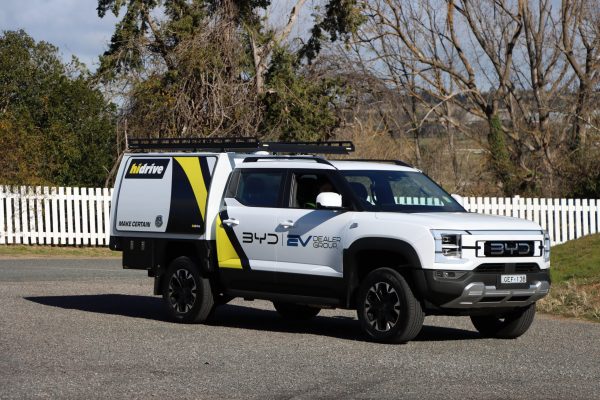
While Ford Pro Convertor accreditation applies specifically to Ford Ranger installations, Hidrive also works extensively across a wide range of fleet platforms from leading OEMs including Toyota, Isuzu, Mitsubishi, Mazda and BYD. This experience helps ensure service body designs are developed with consideration for manufacturer requirements, vehicle payload limits and the operation of vehicle safety systems across diverse fleet environments.
For government, utility and corporate fleets, preserving OEM safety functionality should be a fundamental requirement, so ask any supplier how their installation methods are assessed and by whom.
What safety features help reduce workplace injuries?
Not all workplace injuries result from major incidents. Many arise through repeated daily interactions with equipment, compartments and vehicle access points.
Depending on fleet requirements, service bodies can be specified with a range of features designed to reduce these everyday risks and create a safer working environment for operators.
Ergonomic access systems
Purpose-built folding rear steps provide a stable platform for entering and exiting the vehicle safely. Compared with climbing on wheel arches, towbars or improvised footholds, dedicated access systems support safer work practices and reduce fall risks.
Three-point contact access
Body-mounted grab handles, available in 200 mm and 300 mm configurations, help operators maintain three points of contact when accessing roof-mounted equipment or using vehicle access steps.
This provides a consistent handhold regardless of vehicle make or configuration and supports recognised fleet safety practices for working at height and vehicle access.
Ergonomic door operation
Hidrive’s gullwing-style doors use a two-stage hinge and gas struts, with a pull-down strap so operators don’t have to overreach. Following the recommended closing method, the door’s own leverage does most of the work, reducing shoulder and back strain from opening and closing doors many times a day.
Reducing exposure around traffic and worksites
Traditional gullwing doors can extend significantly beyond the vehicle footprint when open. For crews working on roadsides, in car parks or within active worksites, this can increase the space required around the vehicle and create additional exposure to passing traffic, mobile plant and pedestrians.
Where operational requirements suit, bifold door configurations can reduce the door footprint when open while maintaining access to tools and equipment. For fleets operating in confined worksites or roadside environments, this can help create a safer working area around the vehicle.
Protected electrical wiring
Wiring that is exposed or at risk of damage is protected with split sleeving. Where it passes through panels, grommets or cable glands help prevent abrasion, with sealing where required to help keep water and dust out of the canopy and vehicle.
Secure storage systems
Properly secured drawers, shelving and storage compartments help prevent tools and equipment from shifting during transport, reducing hazards for vehicle occupants and operators.
One-Click drawers click firmly into a home position when closed, helping them remain shut in transit. Aluminium load restraint tracks, rated to 500 kg per linear metre (using two lugs), allow operators to secure equipment to the floor without drilling into the body.
Every rated component, from drawers and shelves to lashing rings and roof bars, is designed, tested and certified to a Safe Working Load and carries a load rating decal, helping operators understand what each component can safely carry.
Supporting safe worksite set-up
Safe operations start before any tools are removed from the vehicle. Dedicated storage solutions for traffic cones and other site-safety equipment help ensure critical equipment remains secure during transport and can be deployed quickly when arriving on site.
For roadside and utility crews, quick access to traffic management equipment can support safer worksite set-up and help establish exclusion zones before work begins. Dedicated cone storage also reduces the likelihood of cones being loose within the vehicle or inaccessible when required.
These design features may seem minor in isolation, but collectively they contribute to a safer working environment over the life of the fleet.
Availability of specific safety features may vary by vehicle model and fleet specification. Features can be specified consistently across an entire fleet where required.
How does service body weight affect safety and compliance?
Vehicle weight has a direct impact on safety, compliance and operational performance. Every kilogram added through a service body reduces available payload capacity. Once tools, equipment and personnel are added, vehicles can quickly approach Gross Vehicle Mass (GVM) limits.
For many fleet managers, the day-to-day payload carried by individual vehicles is not always visible once vehicles are deployed across multiple crews, job sites and locations. Starting with a lighter service body provides greater payload flexibility and helps reduce the risk of vehicles unintentionally approaching GVM limits during normal operation.
Operating close to or above GVM limits can affect:
- Braking performance
- Vehicle stability
- Tyre wear
- Fuel consumption
- Regulatory compliance
Hidrive’s aluminium polymer co-bonded construction helps minimise body weight while maintaining structural integrity. Engineered more like an aircraft fuselage than a traditional steel box, the co-bonded design maximises vibration absorption and corrosion resistance while keeping weight to a minimum.
It’s a balance between weight and durability: keeping body mass down so more of the vehicle’s GVM is available for tools and equipment, without compromising long-term reliability.
Across larger fleets, keeping body weight down provides greater operational flexibility while reducing the risk of exceeding vehicle limits.
Lightweight construction does not need to come at the expense of durability. Hidrive has delivered more than 27,000 service bodies since 1993, with the co-bonded design continuously refined over three decades in Australian conditions. That durability is backed by Hidrive’s Structural & Corrosion Warranty, which lasts for the duration of the OEM vehicle warranty and covers the parts and labour needed to repair or replace any body panel, structural or chassis member that gets structural cracks or holes from rust or other corrosion.
Hidrive provides weight, GVM and payload capacity information to customers, helping fleet managers keep every vehicle within its limits.
How do you know a service body meets safety standards?
Safety claims are only valuable when they are supported by documented processes and independent verification.
One of the simplest ways to assess a service body manufacturer’s commitment to quality, safety and compliance is through recognised certifications.
Hidrive holds:
- ISO 9001 Quality Management
- ISO 14001 Environmental Management
- ISO 45001 Occupational Health and Safety Management
Combined with decades of experience delivering service bodies across government, utility and enterprise fleets, these certifications provide confidence that safety, quality and environmental processes are independently audited, documented and continually improved.
This means assurance that safety is embedded throughout design, manufacturing and installation processes rather than applied as an afterthought.
Why does fleet standardisation matter for safety?
Safety engineering only delivers its full value when it is applied consistently across the fleet.
When service bodies share the same layouts, storage locations and operating principles, technicians can move between vehicles with confidence. This consistency supports:
- Faster operator familiarisation
- Reduced training requirements
- Improved workplace safety
- More efficient maintenance
- Simplified compliance management
Hidrive operates a company-owned national installation network across Sydney, Brisbane, Melbourne, Adelaide, Perth and Goulburn. Every installation centre follows the same documented processes and quality standards, helping ensure consistency across national fleet deployments.
This reduces the variation that can occur when installations are completed through independent subcontractors and helps maintain a consistent standard across every vehicle in the fleet.
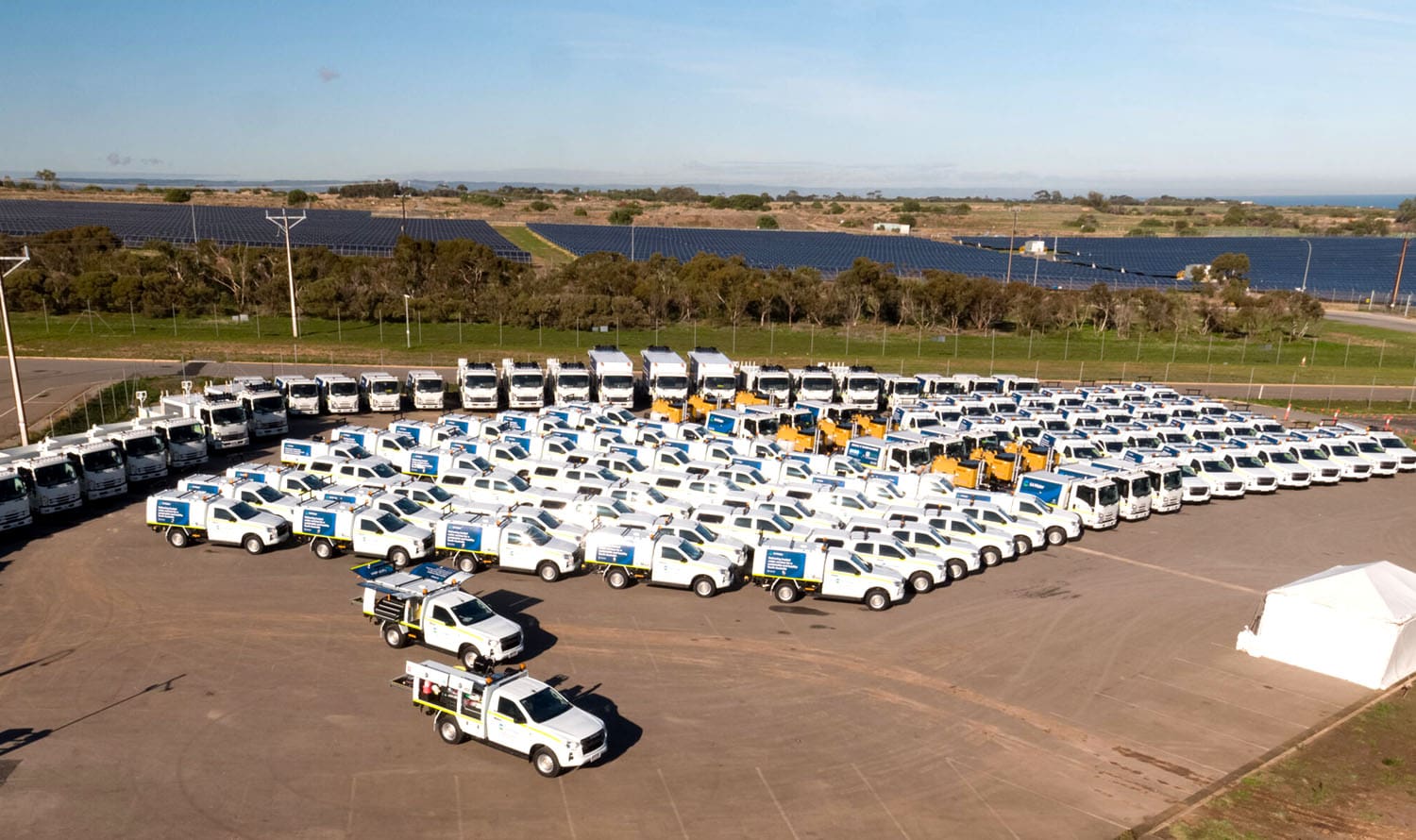
For organisations operating dozens or hundreds of vehicles, standardisation becomes an operational safeguard that strengthens every other safety feature built into the fleet. For a closer look at how this applies in practice, see why fleet consistency matters for emergency services.
Safe service body checklist
Before selecting a service body supplier, check that they can demonstrate:
- Surface preparation and coating processes designed to prevent premature coating failure
- Flush floor design that reduces trip and manual handling hazards
- Positive sealing systems that resist dust and water ingress
- Installation processes supported by documented quality and compliance procedures
- Three-point contact access through steps and grab handles
- Electrical wiring protected from abrasion, moisture and dust
- Rated components clearly marked with their Safe Working Load
- Weight, GVM and payload capacity information provided to customers
- A Structural & Corrosion Warranty that lasts for the duration of the OEM vehicle warranty
- Independently audited quality and safety certifications
- Consistent installation standards across every fleet vehicle
These checks provide a practical framework for evaluating whether a service body has been engineered for safety, compliance and long-term performance.
Choosing the right service body for your fleet
Safety isn’t something that can be measured by a single specification. It’s the result of hundreds of design, engineering and manufacturing decisions that affect how a vehicle performs throughout its life.
The checklist above provides a practical framework for evaluating suppliers. If a manufacturer can’t clearly demonstrate each point, the body hasn’t been engineered for the demands of a modern fleet.
The answers will tell you whether you’re investing in an engineered solution that protects operators, maintains compliance, reduces downtime and supports long-term fleet performance, or simply purchasing a commodity product.
Safe service bodies don’t just reduce workplace risk. They improve fleet availability, support lower whole-of-life costs and help organisations maintain consistent safety standards across every vehicle in the fleet.
Frequently Asked Questions
What safety features should I look for in a service body?
Look for proper surface preparation and coating, flush floor design, positive door sealing systems, ergonomic access systems, protected electrical wiring, secure storage with load restraint options, ADAS-compliant fitment and independently audited quality and safety certifications.
Can a service body affect ADAS performance?
Yes. Poorly designed modifications can obstruct sensors, cameras and radar systems required under ADR 98/00, ADR 98/01 and ADR 107/00. Fleet managers should ensure service body suppliers can demonstrate that vehicle safety systems remain fully functional after installation.
Does service body weight affect GVM compliance?
Yes. Heavier service bodies reduce available payload capacity and increase the likelihood of approaching GVM limits. Lightweight aluminium construction keeps body mass down, leaving more of the vehicle’s GVM available for tools and equipment while helping maintain compliance.
How should a service body be protected against corrosion?
Coating durability depends on surface preparation. Aluminium should be prepared before priming and painting to promote adhesion, while steel components should be blasted and primed before a protective topcoat. Proper preparation reduces peeling, bubbling and exposed surfaces, improving durability and reducing maintenance.
How can fleet standardisation improve safety?
Standardised vehicle layouts help operators confidently move between vehicles, support safer work practices, simplify training and improve operational consistency across the fleet.
What certifications should a service body manufacturer hold?
At a minimum, fleet managers should look for ISO 9001 Quality Management and ISO 45001 Occupational Health and Safety certification. Environmental certification such as ISO 14001 provides further assurance that business processes are independently audited and managed through recognised systems. OEM convertor programs such as Ford Pro Convertor show that a manufacturer’s production and installation methods have been assessed by the vehicle manufacturer.
What warranty should a service body carry?
Look for a structural and corrosion warranty that covers structural cracks and holes from rust or other corrosion, ideally lasting as long as the vehicle manufacturer’s warranty so the body and vehicle are covered for the same period. Hidrive’s Structural & Corrosion Warranty lasts for the duration of the OEM vehicle warranty, alongside a 12-month Basic Warranty.